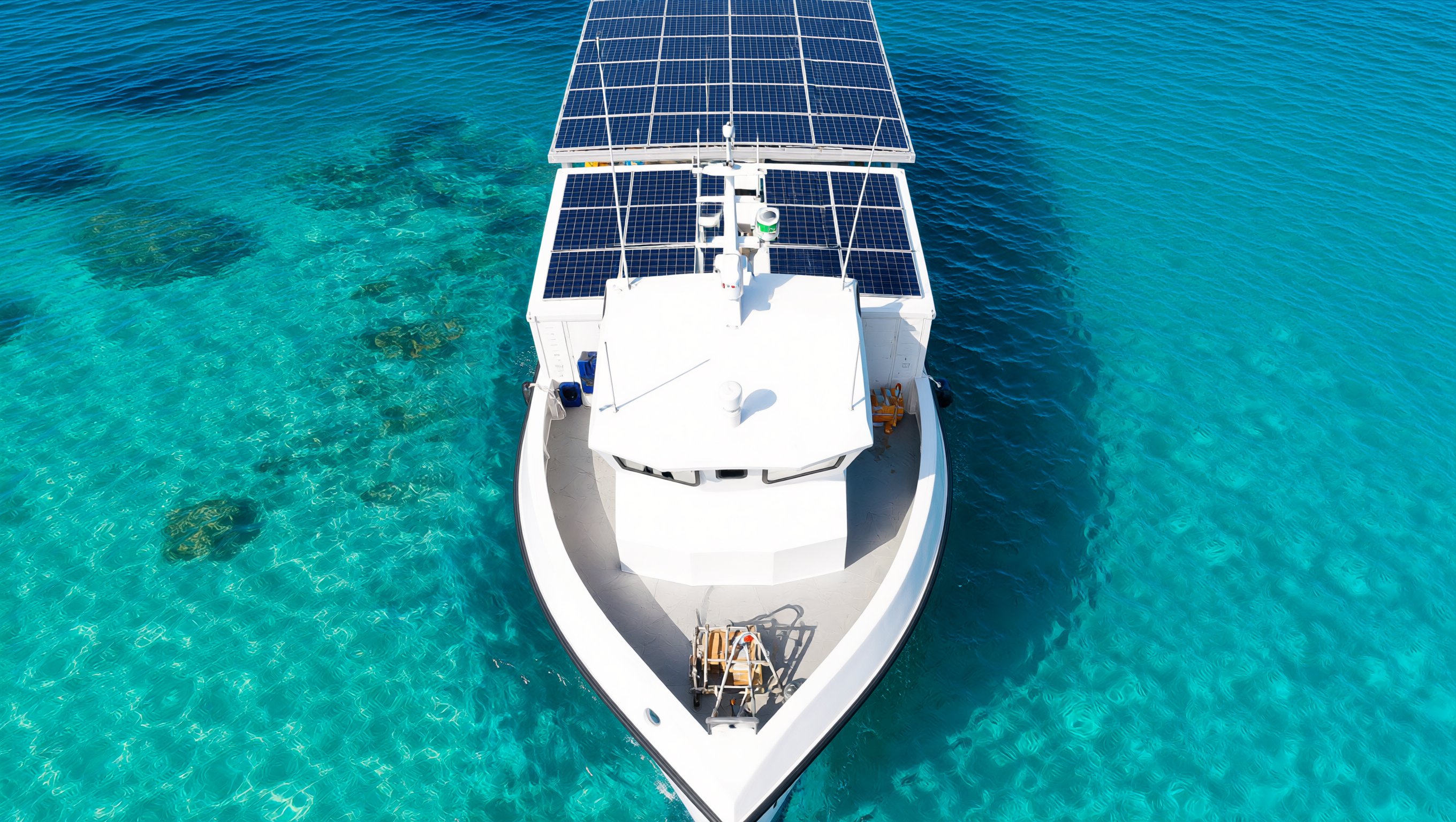
The reference route
A continuous seven-year charter relationship with an international resort operator on the Malé–Dhaalu corridor. The baseline against which every design choice is measured.
We operate a supply-vessel route in the Maldives that has carried cargo, cold chain and crew between Malé and a resort cluster in Dhaalu Atoll for seven continuous years.
In that time we measured everything: fuel, hours, weather, breakdowns, behaviours. The dataset is small — one vessel, one route — but it is real, and it answers a question almost nobody else in the sector can answer with measured data: what does a domestic supply vessel in a small island state actually consume, and where would the savings come from if we rebuilt it?
This site is where we publish what that work is teaching us, and where the project we are building from it lives.
A continuous seven-year charter relationship with an international resort operator on the Malé–Dhaalu corridor. The baseline against which every design choice is measured.
A purpose-designed hybrid-solar supply vessel for resort logistics, engineered around the route's actual duty cycle rather than a generic specification.
Field notes, technical decompositions and policy gaps for the maritime decarbonisation conversation in Small Island Developing States. Plain language, verified numbers.
Seven years of measured fuel logs, duty-cycle distributions and route data. Not modelled — operated.
Verified seven-year operating average on a single 30-metre supply vessel running two round-trips per week between Malé and Dhaalu Atoll.
Target reduction per vessel in the hybrid programme, against the measured baseline. Uses IPCC 2.68 kg CO₂e/L conversion.
Share of the weekly duty cycle the vessel spends moored or at anchor — the structural window where solar accumulation and shore charging change the energy budget.
Most cleantech maritime starts with a technology bet. We started with a measured route and worked backwards from it. — Operating Thesis
Honest decomposition of where the fuel savings actually come from on a hybrid-solar supply vessel — and why the marketing usually gets the proportions wrong.
In Maldives resort logistics, fuel is paid by the resort, not the charter operator. That single contractual fact dictates which decarbonisation models are commercially viable.
Domestic shipping in SIDS sits outside MARPOL Annex VI. That gap is usually framed as a problem. We argue it is also a transferable opportunity, if voluntary frameworks are built into the first vessel.